
An AI Suggestion Needs a Safe Commit Path
An AI feature earns trust when suggestions stay reviewable, actions respect clear authority, and every consequential change has a recovery path.
Read article
BugSquad journal
Notes from the archive and the work: product delivery, engineering craft, technology shifts, and distributed teams.
An AI feature earns trust when suggestions stay reviewable, actions respect clear authority, and every consequential change has a recovery path.
Read article
During an interruption, a clear update gives customers a truthful scope, a safe next step, and a promise to close the loop.
Read article
Rate limits protect capacity, but dependable products make their limits fair, visible, actionable, and safe for people and integrations.
Read article
For consequential changes, decide what can be reversed, what needs confirmation, and how customers can prove the outcome without guessing.
Read article
A permission prompt should arrive with a clear customer intention, minimal access, an honest alternative, and behavior that stays dependable after access changes.
Read article
Permissions should make a product’s boundaries clear: who can act, on which resource, under what conditions, and how the product responds when access changes.
Read article
Long-running work deserves a customer-facing contract: an honest receipt, visible progress, safe recovery, and a durable outcome.
Read article
Support begins in the product. Capture useful context, make ownership visible, and give customers an outcome they can return to without turning a request into a data leak.
Read article
Closing an account should leave customers with a clear outcome: secure access changes, honest data handling, and a record they can trust.
Read article
A security fix earns trust when customers can understand their exposure, take the right action, and see what the product changed without being asked to decode an incident.
Read article
An activity history should help customers understand consequential change, verify control, and resolve uncertainty without exposing sensitive system detail.
Read article
Errors are an interface: define stable meaning, useful recovery, and safe support context instead of leaving clients to interpret a status code.
Read article
Passkeys strengthen sign-in, but the customer experience depends on what happens when a device changes, a credential is lost, or an account is under attack.
Read article
Waiting is part of the experience. Define progress, uncertainty, and recovery so customers know what happened and what to do next.
Read article
How to make a third-party integration clear to users, safe to retry, and recoverable when a dependency does not behave as planned.
Read article
A compact way to turn accessible interaction into decisions the product, design, engineering, and quality team can make before release.
Read article
Feature flags can limit exposure, but a deliberate release still needs a user promise, safe defaults, evidence, and a clear rollback decision.
Read article
A practical first-week measurement plan that connects product outcomes, user friction, and engineering signals after a feature launch.
Read article
Move AI product development beyond the demo with five engineering gates for evaluation, security, observability, and confident release.
Read article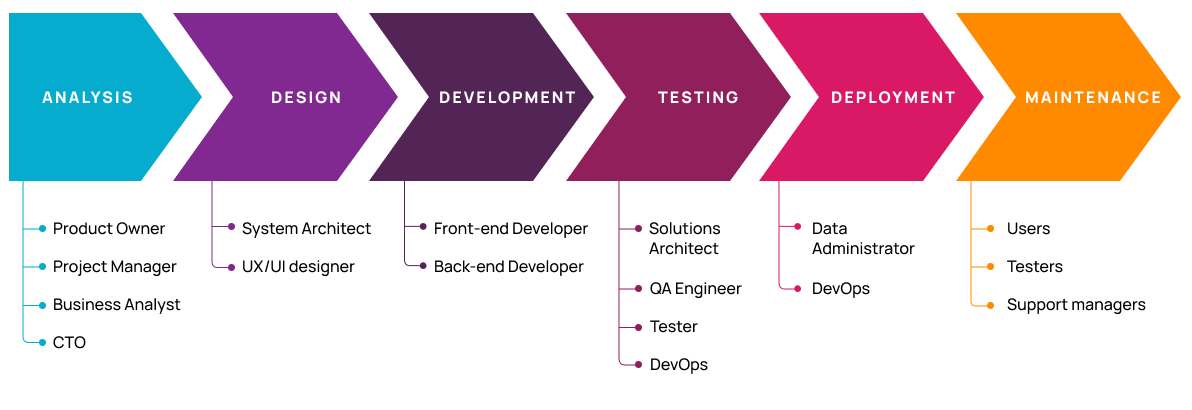
A practical introduction to the stages teams use to plan, design, build, test, and release software.
Read article
Ten sustainable habits that help software developers protect their focus, health, and long-term craft.
Read article
What remote work changes about focus, communication, and the way effective software teams collaborate.
Read article
A look at the technology and market forces that moved electric vehicles into the mainstream.
Read article
A concise introduction to cryptocurrencies, their underlying ideas, and the risks worth understanding.
Read article
The original welcome to BugSquad and the idea behind bringing distributed product specialists together.
Read article